
Independent veteran information and records platform. Not affiliated with VA; not a health care provider. Find accredited assistance.

Back and spine

Pain, range of motion, flare-ups, neurological symptoms, and activities affected by spinal conditions.

Topics to document accurately

Keep a personal factual record of medical diagnoses, treatment history, symptom frequency, functional effects, and questions for your clinician. Different disabilities require different examinations and findings.

Questions for a personal history

  • When did symptoms begin, and what changes have you noticed?
  • What diagnoses, tests, appointments, medications, or therapies have been documented?
  • How often do symptoms occur, and what is the usual duration or severity?
  • What everyday activities or work tasks are affected?
  • Which documents would you like to organize and share with your care team or accredited representative?

Current official evaluation criteria

Use the public DBQ library to locate any available forms and the federal rating schedule to review the current regulatory framework. Requirements depend on the particular diagnosis and claim.
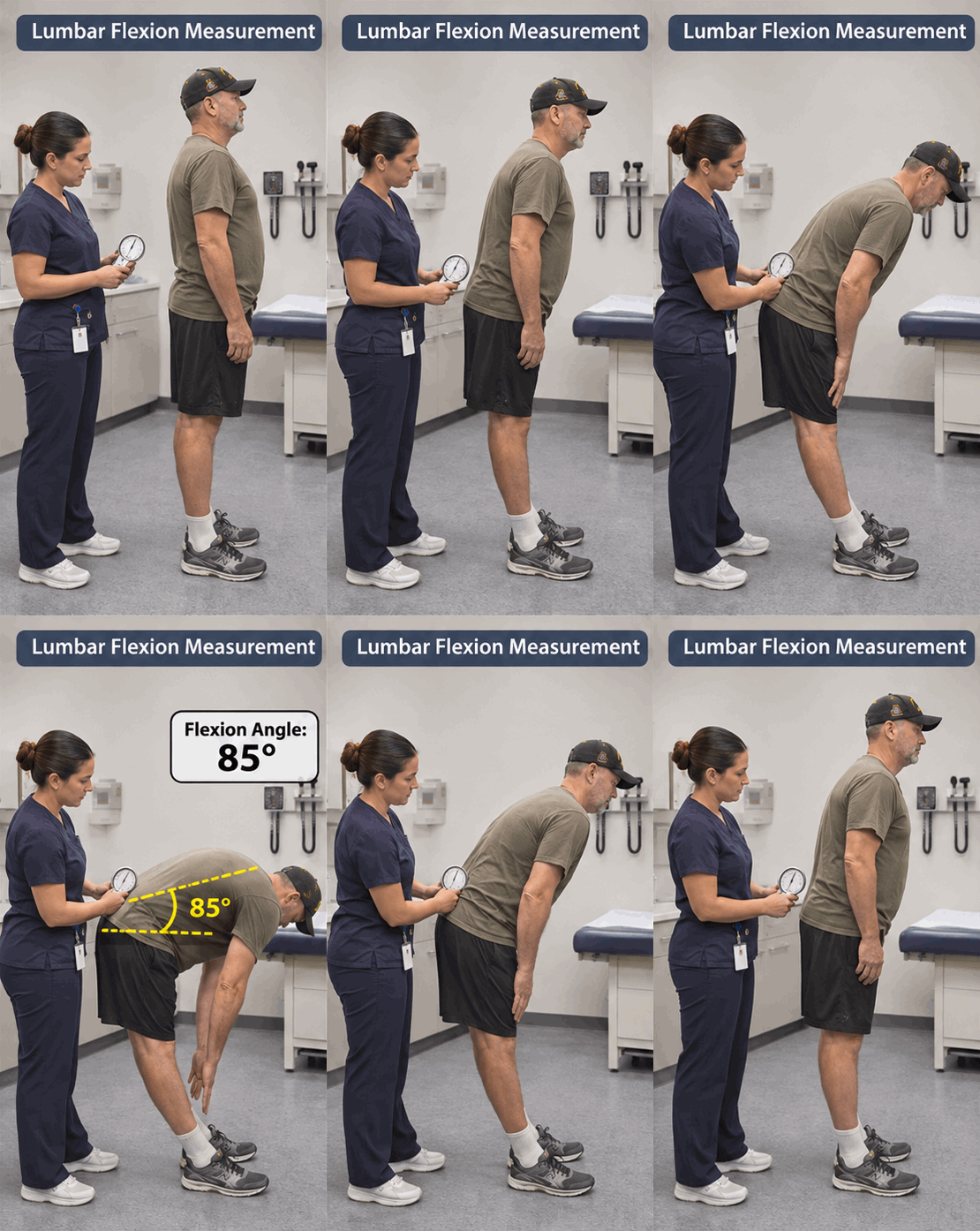
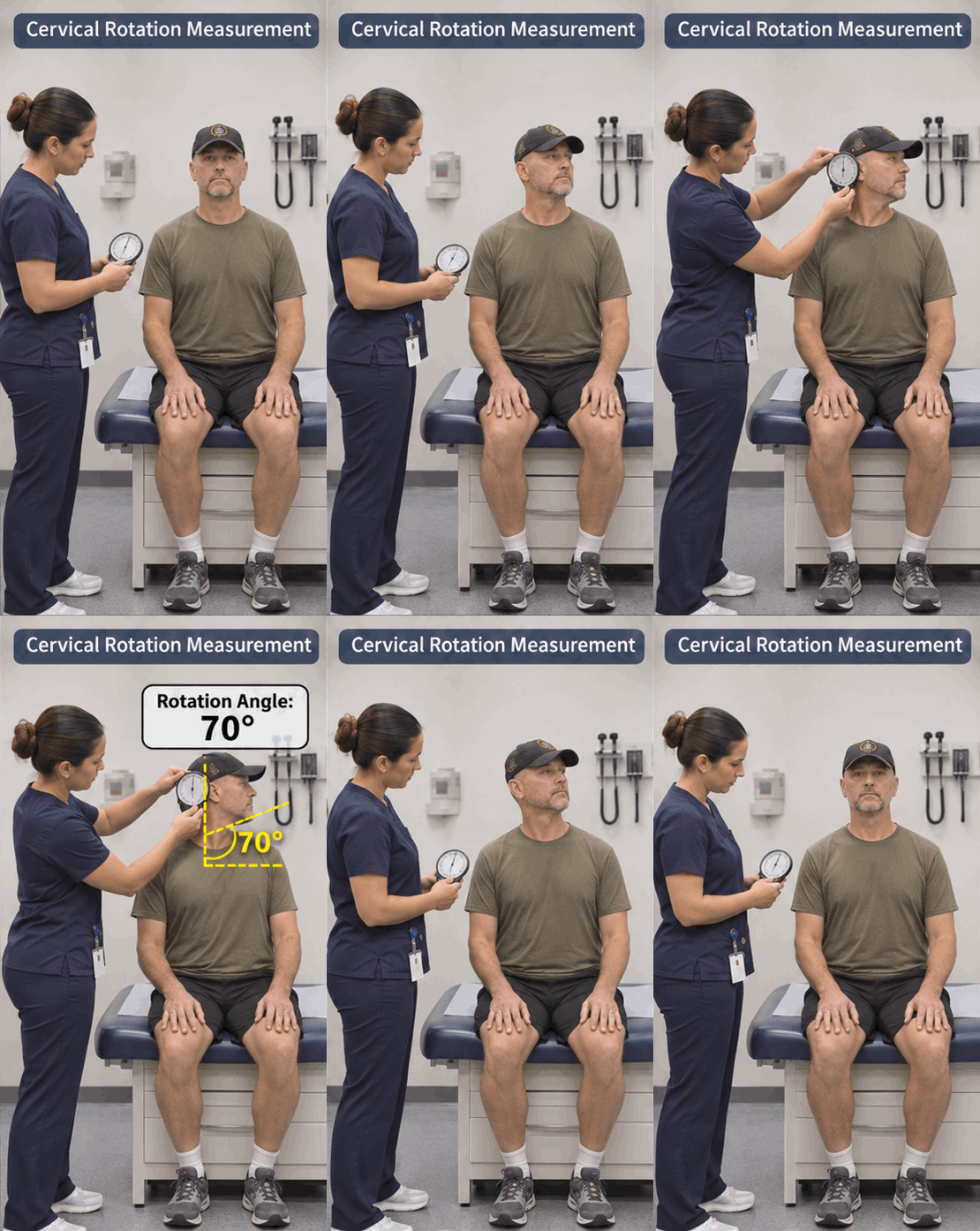
Movement demonstrations

These animations illustrate examination movements. They are not valid clinical measurements; a qualified examiner must evaluate and document findings.

Animated illustrative sequence showing a clinician observing forward flexion of the back / lumbar spine.
DEMONSTRATION 01

Back / lumbar spine

Movement: Forward flexion

Illustrates a clinician observing forward bending and positioning a measuring instrument. The movement and printed angle are illustrative—not a valid clinical reading.

Animated illustrative sequence showing a clinician observing rotation of the neck / cervical spine.
DEMONSTRATION 02

Neck / cervical spine

Movement: Rotation

Illustrates turning the head while a clinician checks motion. Actual measurements require correct alignment and a qualified examiner.